Turning confusion into clarity: a B2B website redesign that helped a construction tech startup explain their platform to two distinct user groups.
Project
Website Redesign
Focus
Content strategy, wireframing, visual design, developer handoff
Timeframe
2 weeks
Tools
Figma, Asana, Claude
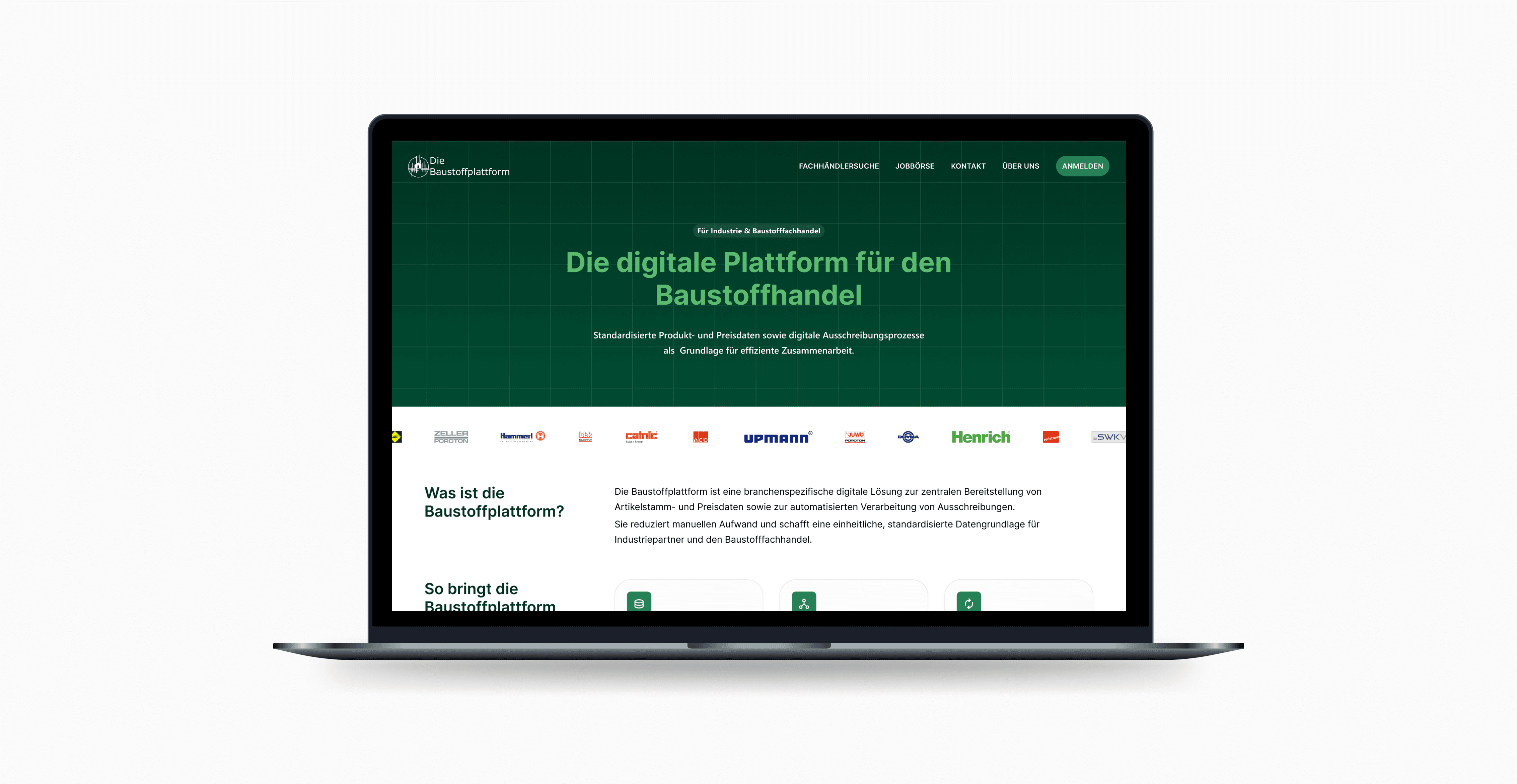
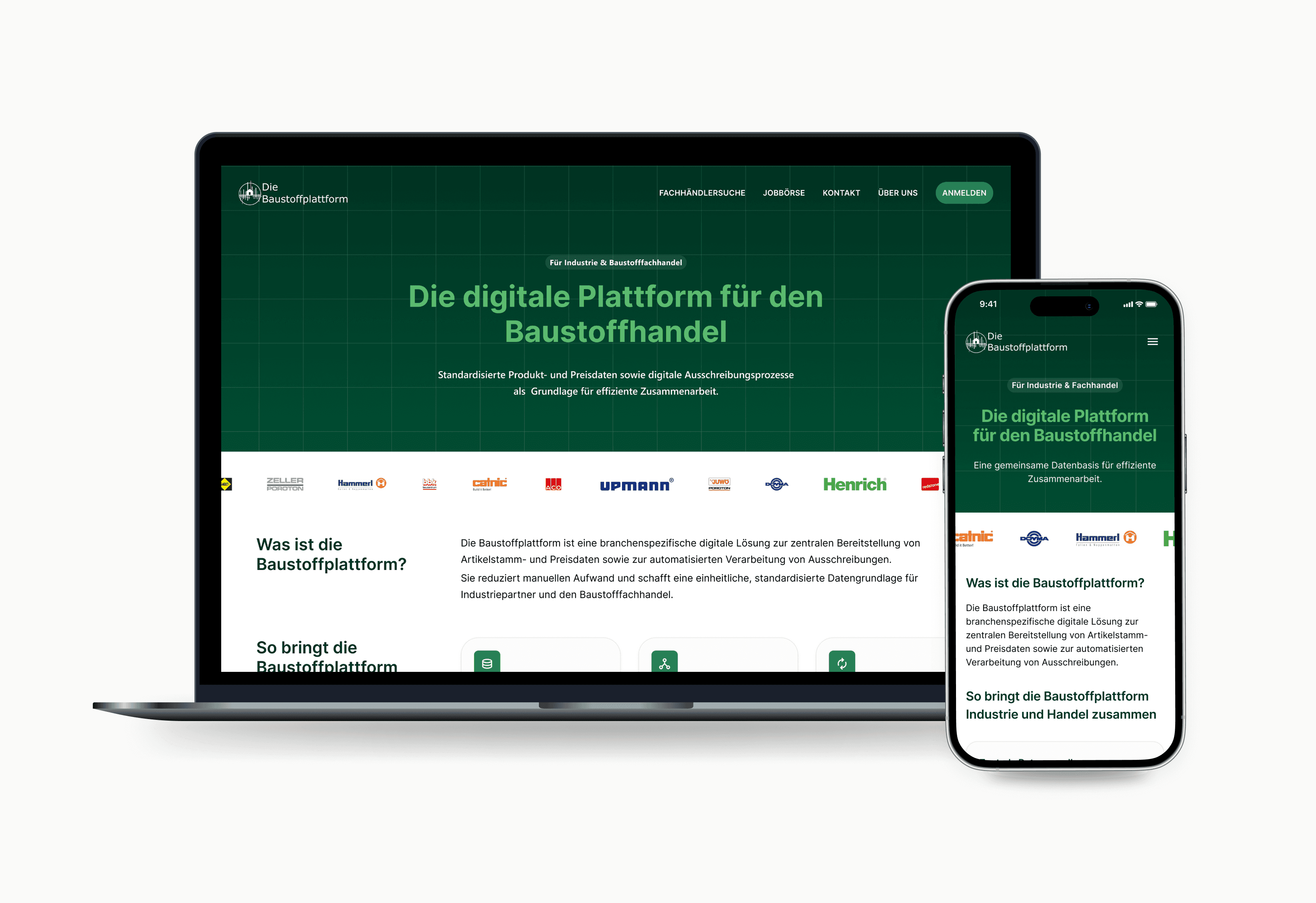
About the project
The Challenge
The existing homepage failed to answer the most basic question visitors would have: what does this platform actually do? Critical information about the platform's three tools - centralized product data, pricing management, and tender workflows - was buried on subpages.

The exiting homepage failed to explain what the platform was about
Developing the Structure
Since the existing site offered little to work with, I started by understanding the construction materials industry quickly: how manufacturers and distributors operate, what pain points the platform addresses, and how to communicate value to both groups without diluting the message.
Two audiences and one page
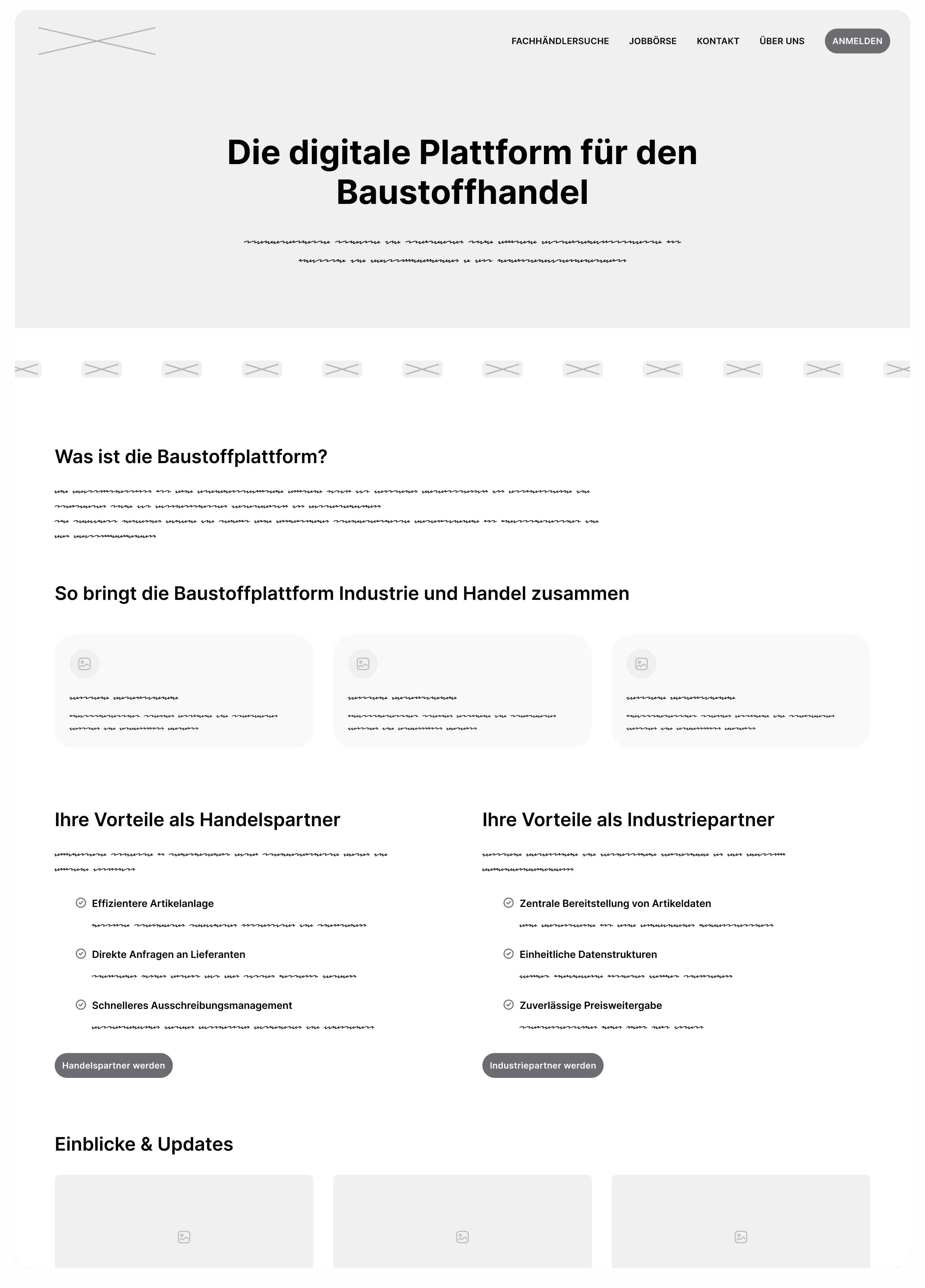
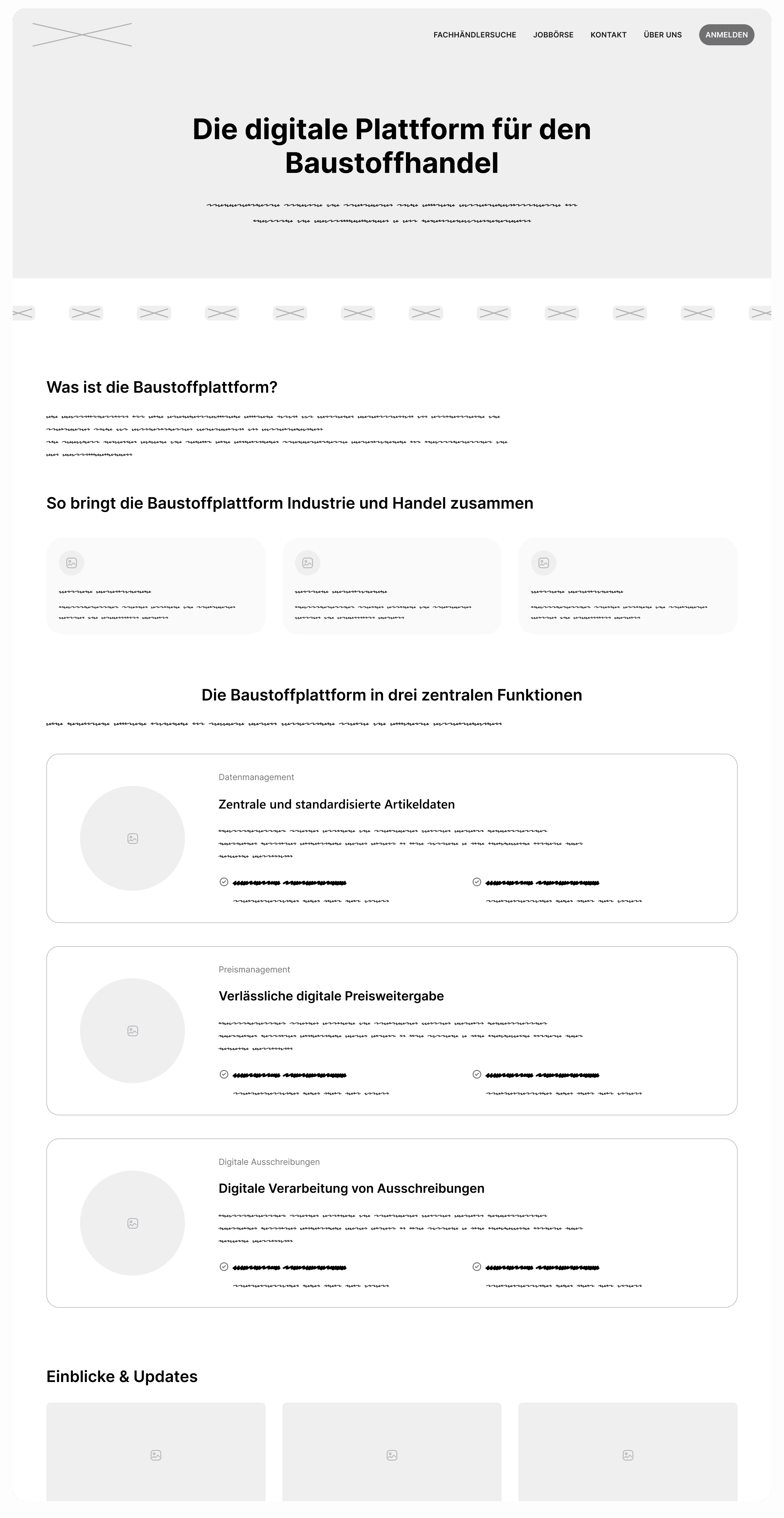
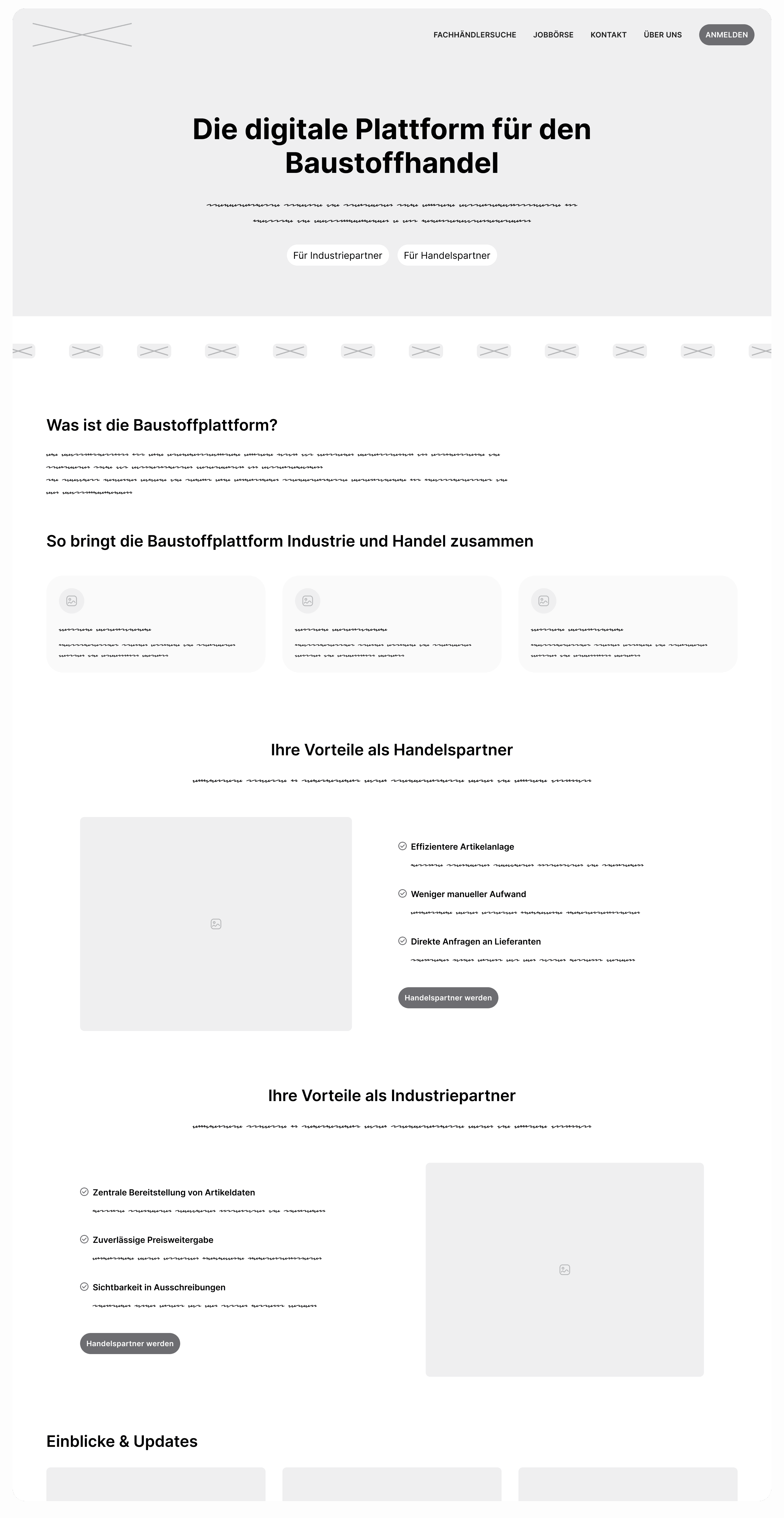
This made clear that the main challenge was, how to serve two audiences on a single page. I developed three structural approaches, each with a different answer to this question. The client ended up choosing Option 1 for its simplicity.
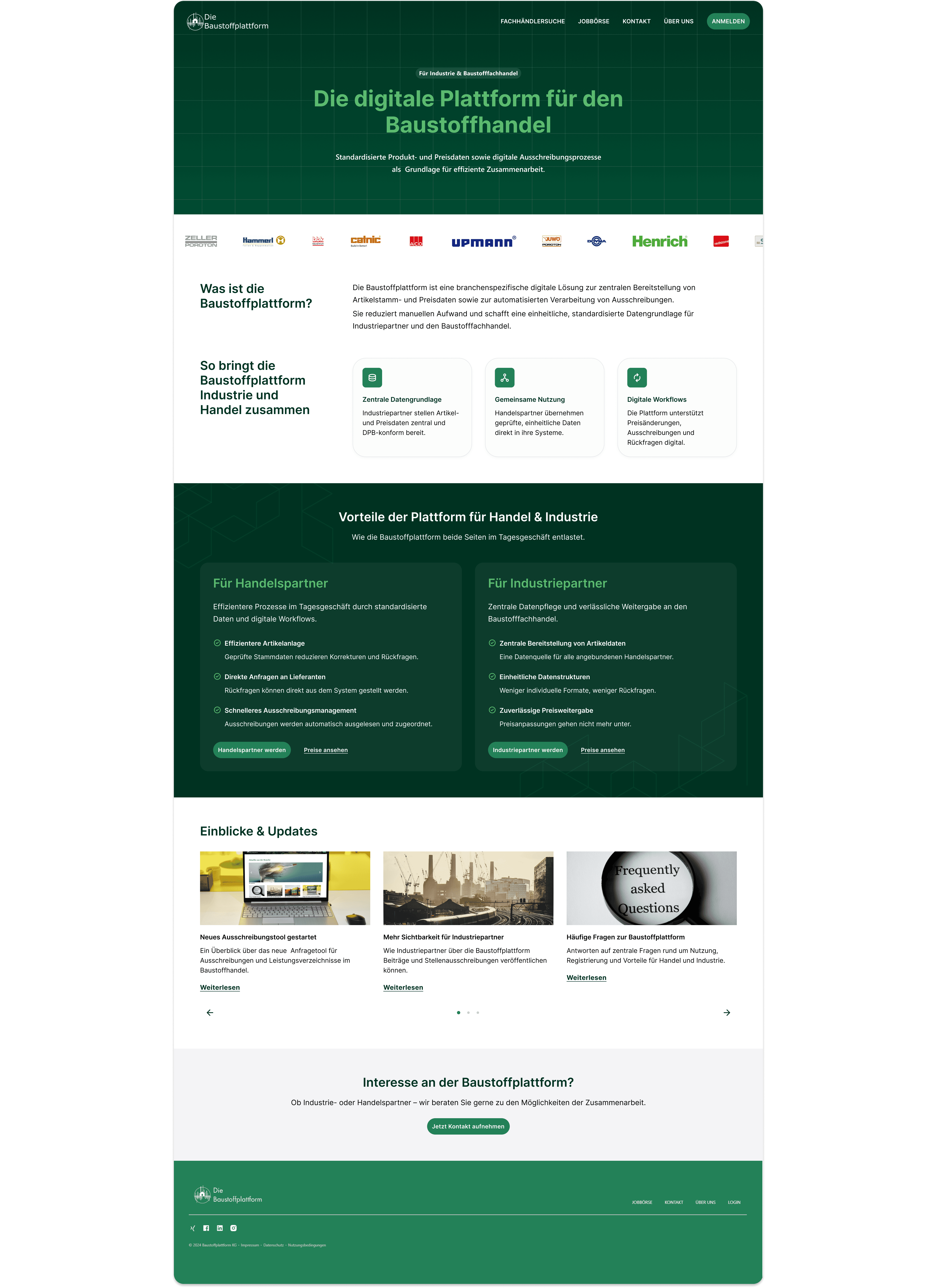
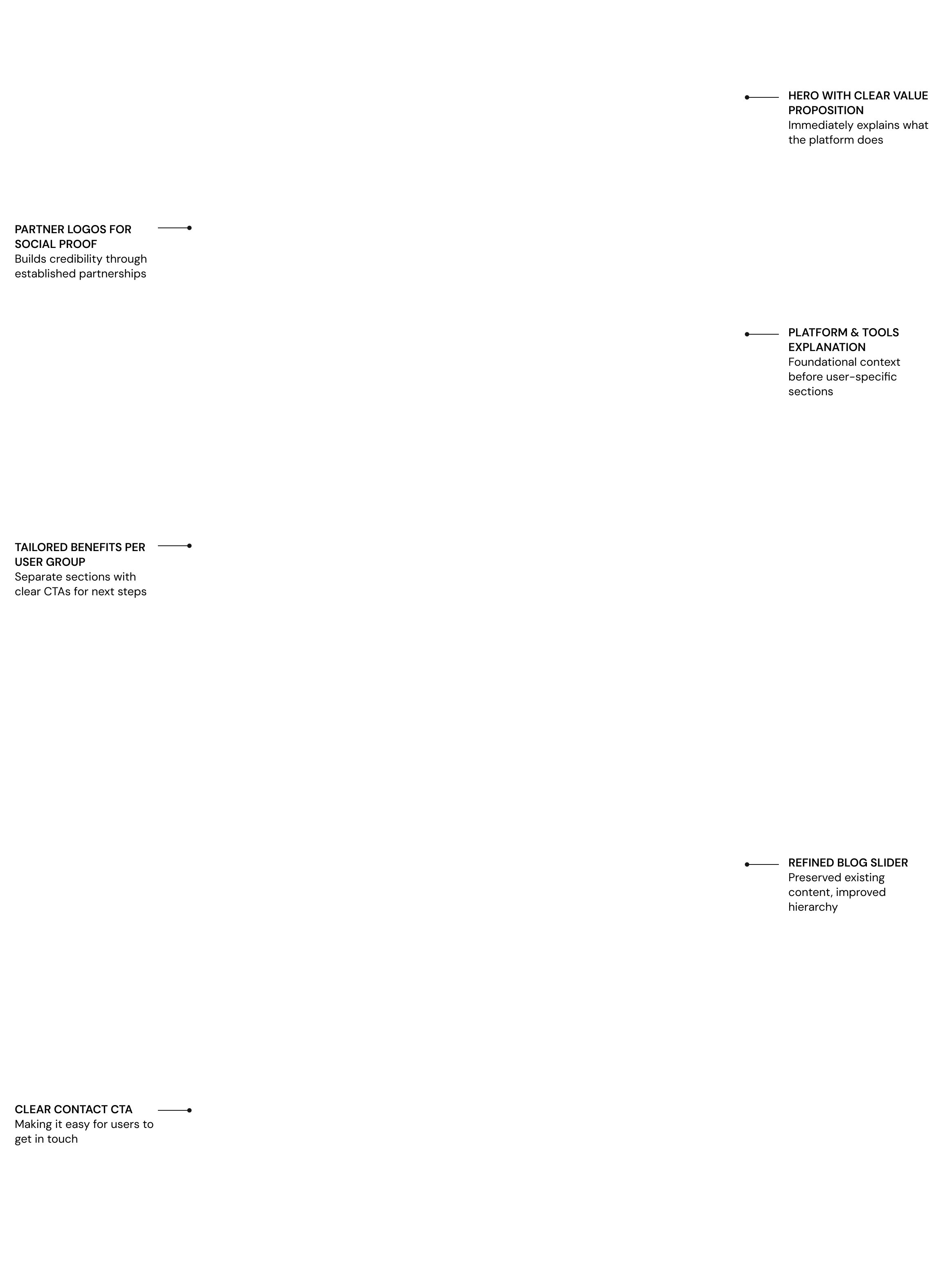
The Design
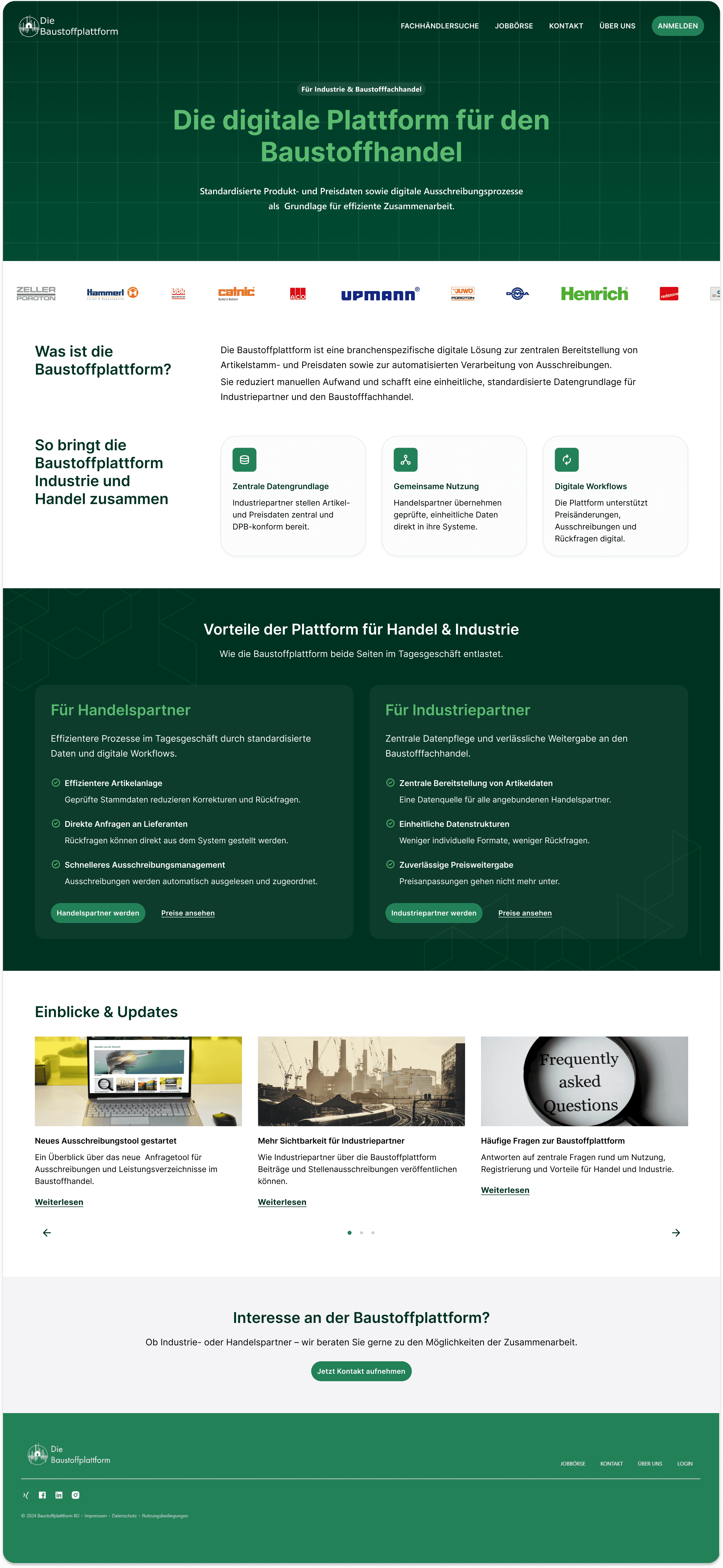
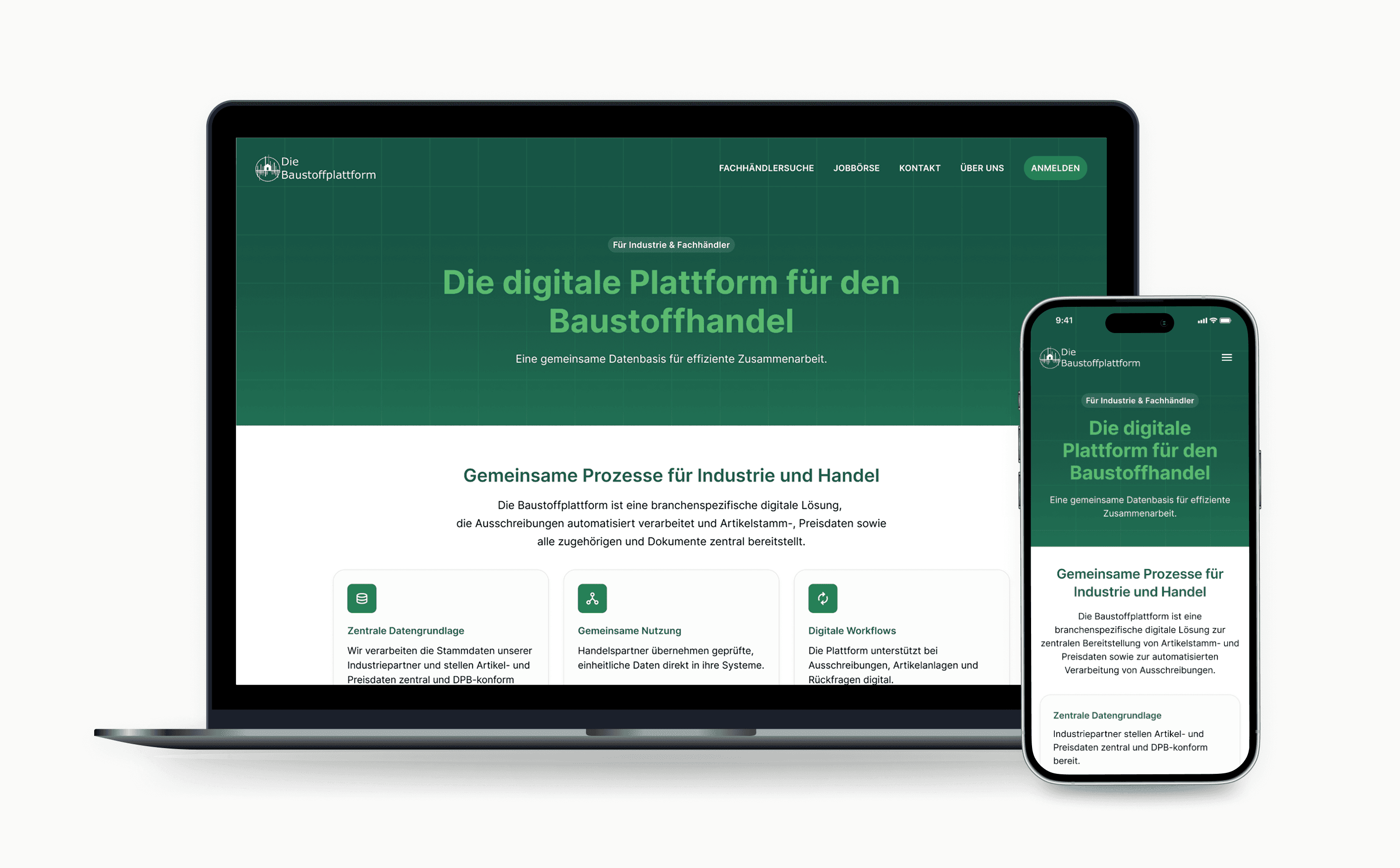
What shipped
The live version reflects a few client preferences: the explanation section was centered and condensed, the partner logos moved below it rather than sitting directly under the hero, and the lighter brand green was kept over the darker shade I'd proposed for stronger contrast. The overall structure and content remained intact.
Reflection
The project required building almost everything from scratch - content strategy, messaging, structure - with little to work from and an unfamiliar industry to get up to speed on in under two weeks. Close collaboration with the client and early conversations with the developer (to reverse-engineer the undocumented brand system) were what made that feasible.
The experience also brought up something every designer encounters: presenting a well-reasoned solution and having the client choose differently. Learning to stand behind your work without being attached to it is something I took from this project.
Working inside an existing system brought its own lessons. Designing within constraints - finding a direction that fits what's already there and still holds up - is something I've come to see as a skill in its own right. The question isn't always what you'd design from scratch, but what the system can absorb and still feel coherent.